

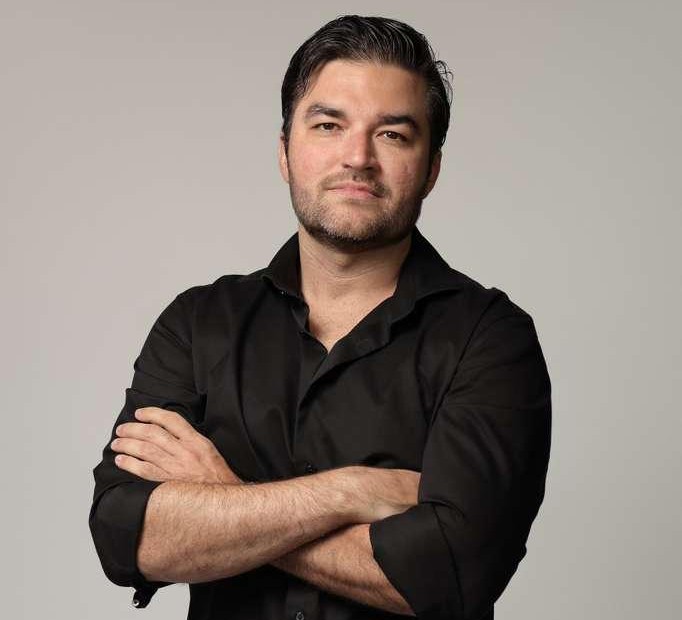

Renan Bastos analyzes how Rolex’s entry into the secondary market establishes a new level of control, liquidity, and standardization in the sector
Rolex’s move to officially enter the pre-owned market marks a significant turning point in the global luxury watch industry. The decision, announced in December 2022, breaks with a long-standing position of the Swiss manufacturer, which for 118 years maintained absolute control over the distribution of new products, without direct involvement in the secondary market.
The creation of the Certified Pre-Owned program, in partnership with selected authorized dealers, formalizes a strategic shift that had already been signaled by the strong growth of the used watch segment. The initiative began operating in test markets such as Switzerland, Austria, France, Germany, the United Kingdom, and the United States, through official boutiques that started offering pre-owned pieces with factory certification.
Each watch comes with a two-year international warranty, official documentation, and undergoes a restoration process aligned with the manufacturer’s standards in Geneva, establishing a new level of control over pieces that previously circulated largely outside the institutional environment of the brands.
According to industry analyst Renan Bastos, this move should not be interpreted as a conventional commercial expansion, but rather as a structural response to a market that was already operating with high volume and little standardization.
“Rolex is not entering the secondary market out of opportunity, but out of strategic necessity. The volume of pieces in circulation had already exceeded the brand’s indirect control. By institutionalizing this segment, it begins to control narrative, authenticity, and perception of value,” he explains.
For decades, Rolex officially ignored the secondary market, which is estimated at around US$ 20 billion annually for the brand alone, approximately three times the revenue generated from new products, according to data from Morgan Stanley. The expansion of platforms such as Chrono24, which lists more than 500,000 Rolex watches simultaneously, along with the growth of specialized companies like Watchbox and Bezel, consolidated an environment in which the circulation of pieces surpassed the output of official boutiques.
This scenario exposed significant vulnerabilities, such as the proliferation of counterfeit pieces, inadequate restorations, and documentation inconsistencies, factors that began to directly impact the brand’s perception of value in the long term.
Jean-Claude Biver, former CEO of TAG Heuer and independent consultant, summarizes this dynamic by stating that Rolex is protecting its brand by establishing an official standard of authenticity within a market that grew in a decentralized manner.
In Renan da Rocha Gomes Bastos’ view, the impact of the initiative goes beyond certification.
“When the brand enters, it not only validates the secondary market, it redefines the rules. An institutional standard emerges that influences pricing, liquidity, and purchasing behavior.”
Market data reinforces this analysis. Contrary to initial expectations that certification would push prices down, the observed effect was the creation of a premium associated with official validation. A 2019 Submariner ref. 116610LN, for example, which was traded at around US$ 12,500 on independent platforms, began to be sold for approximately US$ 13,200 with certification, reflecting a 5.6% increase linked to the factory warranty.
Discontinued sports models have maintained their value in the secondary market. The Daytona 116500LN, for instance, continues to be traded at a premium, reaching around US$ 35,000 when certified, compared to approximately US$ 32,000 in the unofficial market.

Renan da Rocha Gomes Bastos
For Renan Bastos, this behavior highlights an important shift in value logic.
“The market begins to differentiate not only the product, but also the level of validation that accompanies that product. This is typical of markets undergoing a process of institutionalization.”
Rolex’s strategy also reveals relevant operational benefits. By operating in the secondary market, the brand creates a new source of revenue from pieces already sold, expands access to models for clients facing constraints in the primary market, and, most importantly, builds a structured database of watches in circulation.
This control over information becomes a strategic asset, especially in combating counterfeiting and maintaining brand integrity in the long term.
In Renan Bastos’ assessment, the move signals a new stage for the watchmaking industry.
“What we are seeing is the transition from a market based on relationships and perception to a more structured market, with data, standards, and greater institutional control. Rolex’s entry accelerates this process definitively.”
More than an isolated change, the Swiss brand’s initiative indicates that the luxury watch market is moving toward a more transparent, organized, and criteria-driven environment. In this context, the secondary market ceases to be a parallel space and begins to occupy a central role in value formation within global haute horlogerie.